 Bắc Ninh


Returning to the homeland of Vietnamese Buddhism
BAC NINH - The land of Bac Ninh – Kinh Bac is famous for its ancient, solemn, and sacred pagodas. Almost every village in Bac Ninh has a pagoda that serves as the local cultural and religious centre, embodying the area’s beautiful traditional values. On an early day in July, I made my way to Dau Pagoda, also known as Dien Ung Pagoda, honoured as the “homeland of Vietnamese Buddhism.”
Folklore researcher Nguyen Quang Khai, who has published numerous books on Buddhism in Bac Ninh, shared: “When speaking of Buddhism and the pagodas of Bac Ninh, we cannot mention Dau Pagoda. The Dau – Luy Lau region was the first place where Buddhism was introduced to Vietnam. Due to various favourable circumstances, from the early Common Era, foreign monks, including those from India, Central Asia and China chose this land to practice and teach Buddhism.”
 |
|
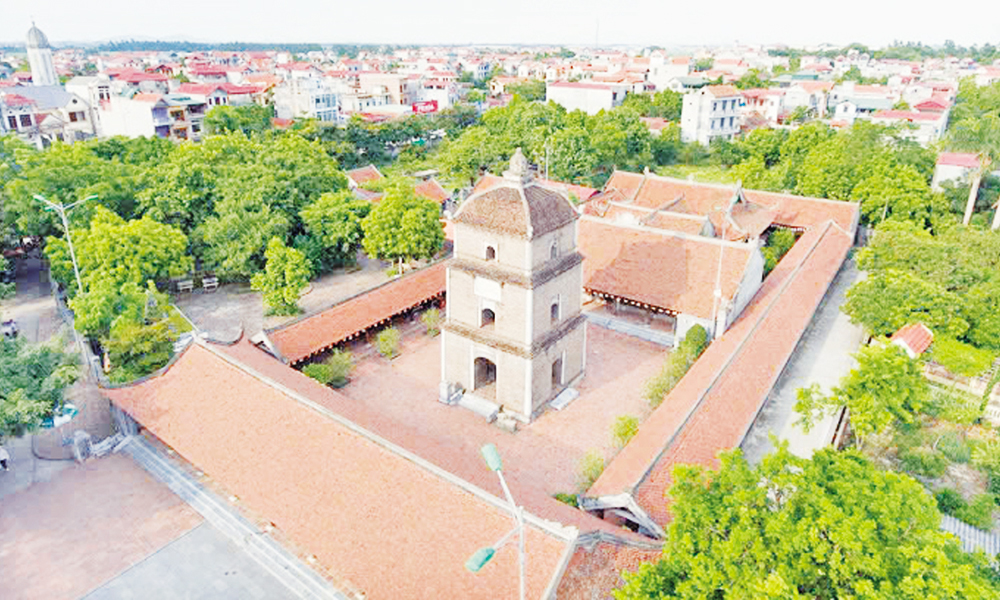
The special national heritage site of Dau Pagoda in Tri Qua ward. |
Dau – Luy Lau was not only the starting point of Vietnamese Buddhism but also a confluence where Confucianism, Buddhism, and Taoism coexisted and went into Vietnamese life with profound humanistic values.
Despite the many upheavals of history, Dau Pagoda has maintained its role as a central Buddhist site in Vietnam. Today, the pagoda still largely preserves its ancient architecture.
In the courtyard, Hoa Phong Tower rises solemnly. Beneath its towering presence, one can feel an invisible current spreading tranquility into every breath.
Hoa Phong Tower is a 15-meter-tall, square-shaped brick structure, with three grand tiers. Inside the lowest tier stand four Vajra guardian statues at each corner, with a bronze bell and gong hanging above.
At the foot of the tower lie two precious relics: a stone sheep statue - a remnant of Central Asian culture - and a stele inscribed with “Hoa Phong Tower – Co Chau Dien Ung Pagoda.” Each artifact is a “witness” that silently recounts the temple’s millennia-long journey of existence.
The main worship hall at Dau Pagoda is the Upper Shrine, where the statue of the Buddha Phap Van is enshrined at the centre. Nearly two meters tall, the statue has feminine features, with eyes seeming to listen deeply to the voices of the world.
On either side stand statues of Golden Boy and Jade Maiden; below are statues of the White Lady and Red Lady - believed to be noblewomen from the Le-Trinh era who greatly contributed to the pagoda’s restoration.
These sculptures are not only 18th-century masterpieces but also reflect the fusion of Buddhism with local folk beliefs.
Especially notable is the pagoda’s collection of ancient woodblocks, consisting of hundreds of engraved plates organised into sets which are precious records of the history of Vietnamese Buddhism.
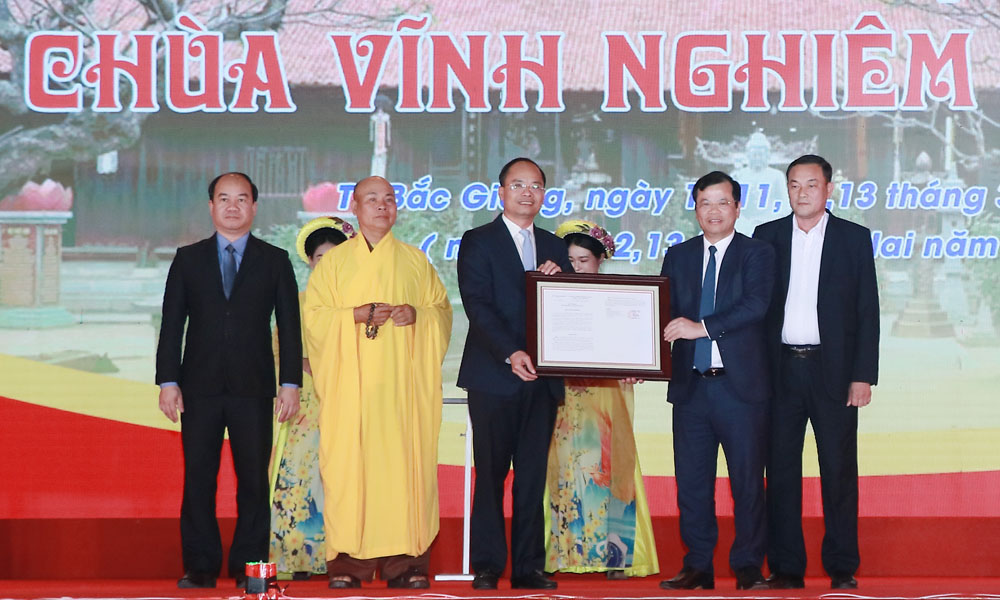
In 2024, the Dau Pagoda woodblocks, dated from 1752 to 1859, were officially recognised as a National Treasure by the Prime Minister.
Cultural and historical experts affirm that from the centre of Dau – Luy Lau, Buddhism spread throughout the country.
Later generations of monks continued the Buddhist lineage rooted in Luy Lau, laying a solid foundation for the birth and growth of Vietnamese Buddhism, especially the Truc Lam Zen sect.
The deeper we explore, the clearer it becomes why Bac Ninh is regarded as sacred land. Not only because of what is written in history books, but because of its quiet pagoda like ancient mirrors reflecting the depth of Vietnamese culture, where people can find themselves in stillness and peace.
Visiting a pagoda is not merely to pray, but to listen to one’s own heart and to realise that amidst life’s hurried rhythms, there remain places of calm to which we can return.

.jpg)


Ý kiến bạn đọc (0)