 Bắc Ninh


Bac Ninh promotes safe, sustainable livestock farming
BAC NINH – Since the beginning of this year, livestock product prices in Bac Ninh have increased and remained stable, providing favourable market conditions and considerable profits for farmers. These are positive signals for the province’s livestock sector to continue its sustainable development and contribute to overall economic growth.
Positive transformations
Livestock farming has been a bright spot in Bac Ninh’s agricultural growth this year. Live pig prices have risen sharply, even reaching record highs at times and are currently stable at favourable levels.
 |
|
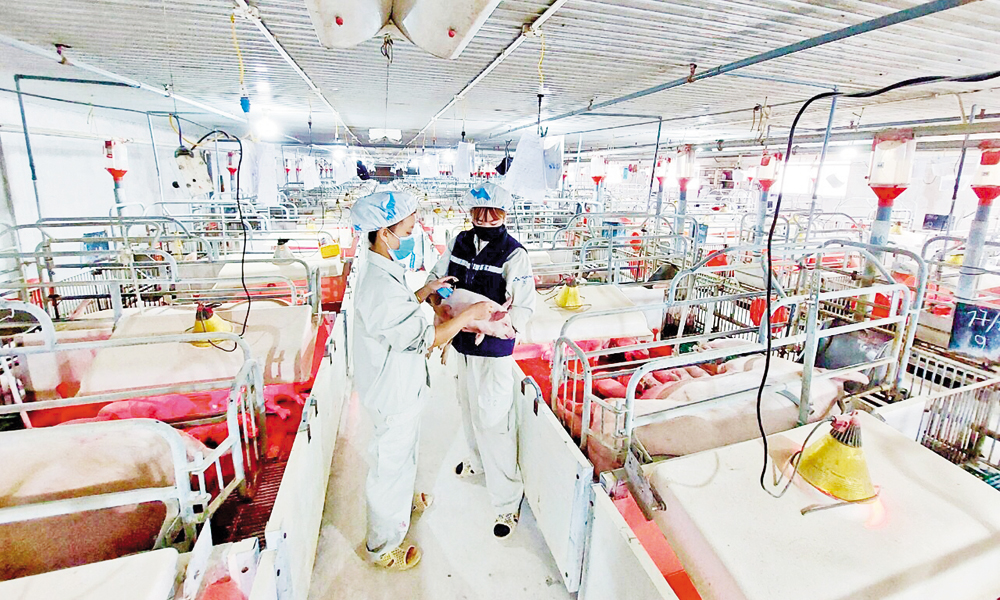
A pig farm of Son Dong Livestock Company Limited. |
Poultry prices and market demand have also remained stable, ensuring profits for farmers. Disease control has been effective, with no dangerous outbreaks requiring official announcements. These factors have encouraged farmers to reinvest, restock and expand their herds.
For example, farmer Nguyen Van Dung in Canh Thuy commune recently sold nearly 500 pigs. Seeing high prices, good disease control and stable feed costs, he immediately disinfected his facilities and restocked with nearly 1,000 piglets.
“With live pig prices around 70,000 VND per kg and only slight increases in feed costs, we are making good profits,” Dung said.
According to authorities, livestock farmers in Bac Ninh have shifted from small-scale, household production to concentrated, large-scale farming with integrated value chains.
Many models now apply scientific and technological advances to produce high-yield, high-quality products that ensure food safety and environmental protection.
Particularly, many farm owners invest in closed barns with cooling systems, automatic feeders and drinkers, and waste treatment using biogas tanks and biological products, adopting biosecurity procedures and organic production standards such as VietGAP, GlobalGAP, and circular farming.
Hundreds of contract farms are linked with major companies like CP, DABACO, ANT, Hoa Phat, RTD, MAVIN, and Hai Thinh. Many large-scale egg farms house hundreds of thousands of hens under strict biosecurity.
Feeding, watering, egg collection and temperature and lighting adjustments are all machine-controlled. Waste is collected automatically and treated with biological products through aerobic fermentation, reducing decomposition time and odours. This modern farming method not only yields high profits and cuts labour costs but also ensures environmental hygiene.
At H&Q Vietnam Livestock Company’s pig farm in Tam Tien commune, covering 2 hectares, there are 2,400 sows, producing 5,000-6,000 piglets monthly. Partnering with Japfa Comfeed Vietnam, the company is supported with breeds, feed, veterinary medicine and stable market prices.
It has invested in a closed-loop waste treatment system with modern separation technology and a biogas tank holding 6,000 cubic metres, treating nearly all waste.
The farm is isolated from residential areas, and all wastewater is processed through seven regulating ponds and circulated by pumps, preventing discharge into the environment. Treated livestock waste is used to generate electricity and fertilise crops.
Targeting exports
Bac Ninh’s livestock sector is undergoing its strongest transformation ever. Officials believe the province has abundant potential for concentrated farm development with sustainable linkages, environmental protection and product quality improvement.
According to Luong Duc Kien, Deputy Director of Bac Ninh’s Sub-department of Animal Husbandry and Veterinary Medicine, the province’s pig herd reached over 1.1 million in the first half of the year; poultry flock exceeded 25.2 million and cattle herd surpassed 112,000. Output is expected to continue rising towards year-end as product prices remain stable, with some showing upward trends.
Furthermore, following the provincial merger, previous support policies for animal husbandry and veterinary services from the old Bac Ninh province now cover the new, larger Bac Ninh province. This expansion, coupled with a broader domestic market, provides a strong foundation for livestock growth.
Kien added that linking production, processing and consumption chains, ensuring disease and environmental safety and improving product quality towards exports are crucial for sustainable development.
Pig waste treatment remains a key issue. Some communes are piloting South Korean electromagnetic device and biological product technologies to enhance digestion and absorption rates, reduce emissions and limit odour spread.
After 15 days, waste can be directly applied as fertiliser without composting – a breakthrough in pig waste management with high potential for replication.
In the coming time, the agricultural sector will continue encouraging and facilitating enterprises to invest in upgrading large-scale, high-quality farms to ensure stable growth and minimise environmental impacts.
It will promote advanced science and technology applications, organic and circular farming, and build biosecure facilities that produce clean, traceable, environmentally friendly products.
The goal is to develop concentrated, closed livestock areas away from residential zones, with integrated chains from farming to slaughter, processing and distribution; improve livestock quality, especially pigs and chickens; and gradually achieve official export.







Ý kiến bạn đọc (0)